Why are old comics so hard to read?
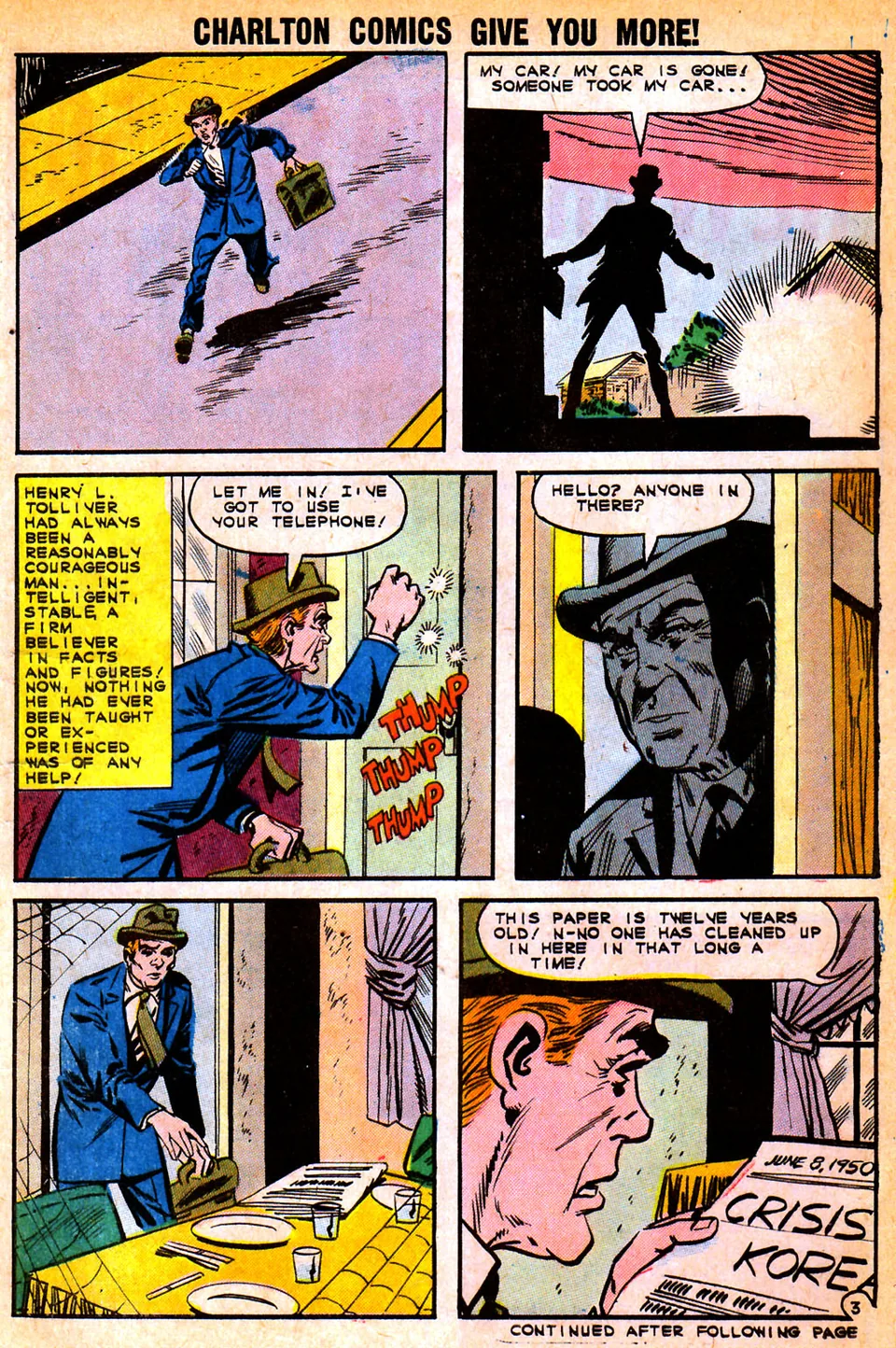
Old comics are hard to read for four reasons: small hand lettering, crowded pages, long captions that describe what the pictures already show, and scans of yellowed, cheaply printed paper. Most of it comes from how they were made, for a cheap book read on paper rather than on a phone. You can make them far easier: read one panel at a time so each fills the screen, pop out the speech balloons, or have the whole thing read aloud.
Why are old comic pages so crowded?
Because they packed more in. In the American comics we counted from our public catalog, pages from the 1940s and 1950s average about six panels each, more than the 1960s books. Six panels on one page leave each panel small, and the words inside it smaller.
How many panels per comic page?
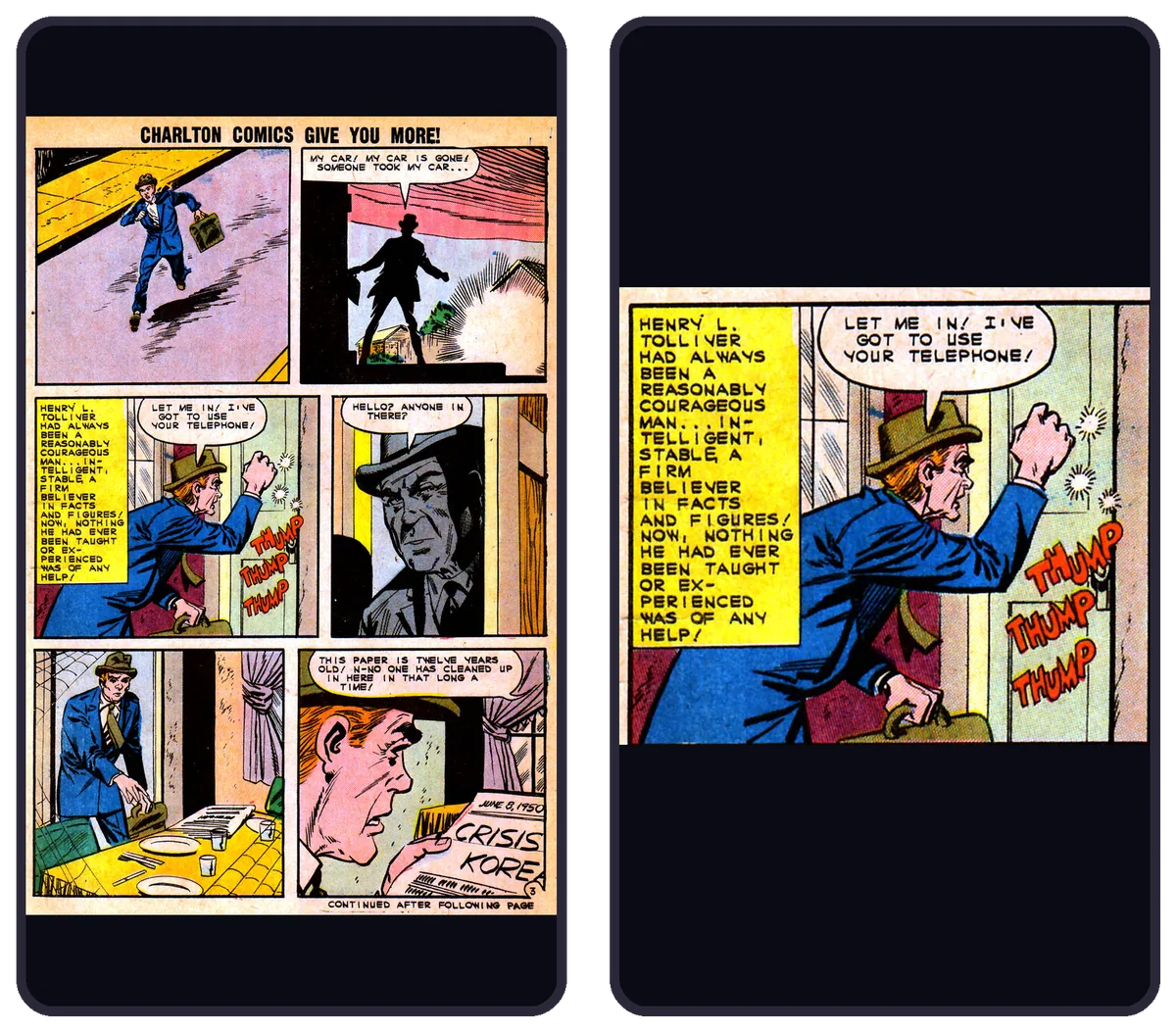
Why is the lettering in old comics so small?
It was lettered by hand, in capitals, at a size meant for a printed page held in your hands. Capitals stay clear when they are small, which is partly why old comics use them for nearly every word. Shrink that page to fit a phone and the letters shrink with it.
Why are old comics so wordy?
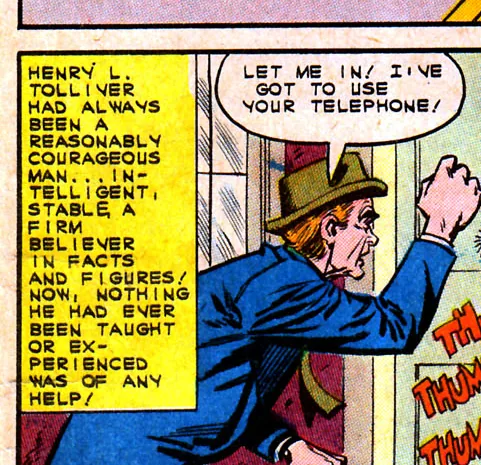
Many were written as monthly issues, for readers who might pick up any one of them cold, so they recap the story as they go. Captions often describe what the picture already shows, and balloons carry the explaining on top. It makes for a lot of words in a small space.
Why is it hard to tell which panel comes next?
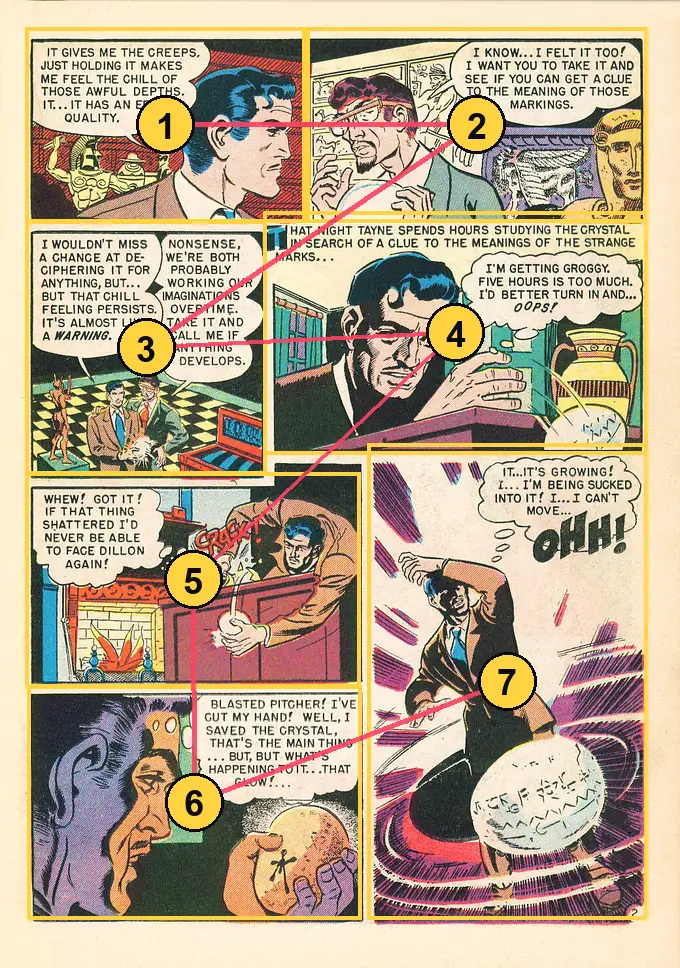
Old layouts often step off the plain left to right, top to bottom path: a tall panel down one side, two panels stacked beside it, a balloon tucked wherever the art left room. Read a whole page on a small screen and it is easy to lose the thread.
Why do old comic scans look faded or blurry?
Because most old comics survive as scans of the printed books, and those were printed on cheap paper that yellows with age, in a few flat colors that did not always line up. A scan keeps all of it. A better scan helps more than any setting, because a bigger view cannot add detail that is not in the file.
How can I make old comics easier to read?
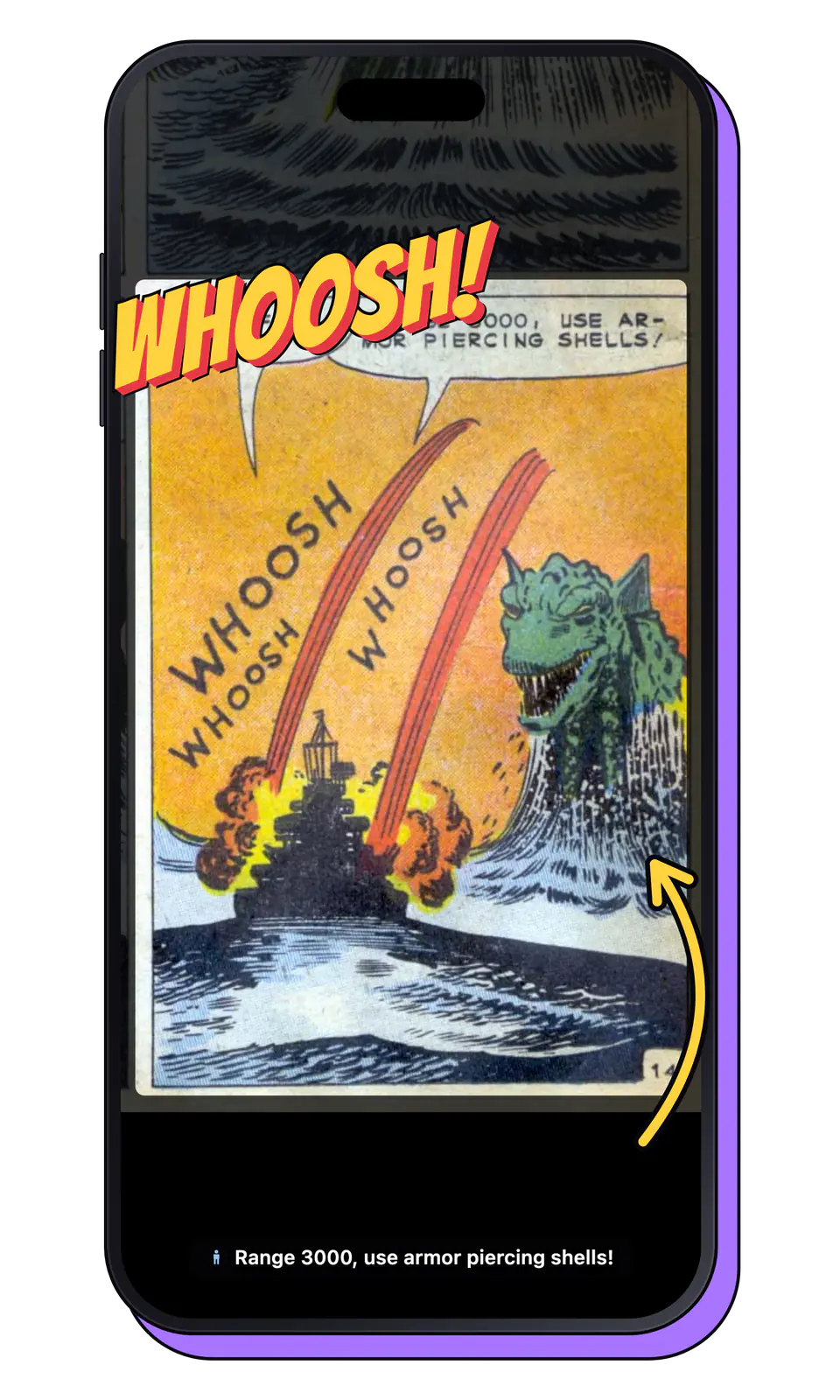
Read them one panel at a time and let the screen do the zooming.
- Open a public domain classic on the free streaming shelf, or add your own file with + Add Comics: CBR, CBZ, PDF or EPUB.
- Read it in Panels: each panel fills the screen, in reading order, and a tap or a swipe moves to the next one.
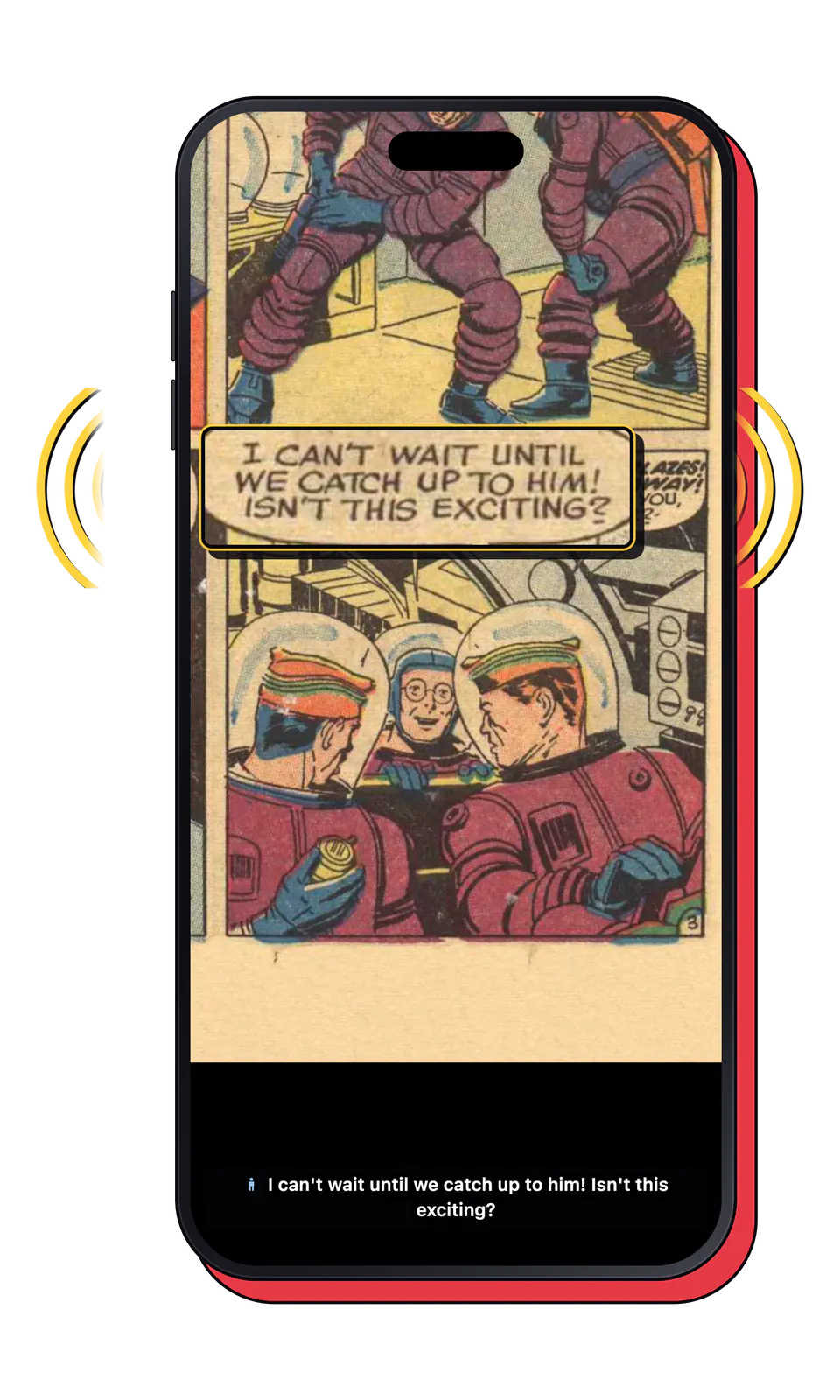
- Open the reader's Settings and switch on Pop out balloons under View, to see each speech balloon up close.
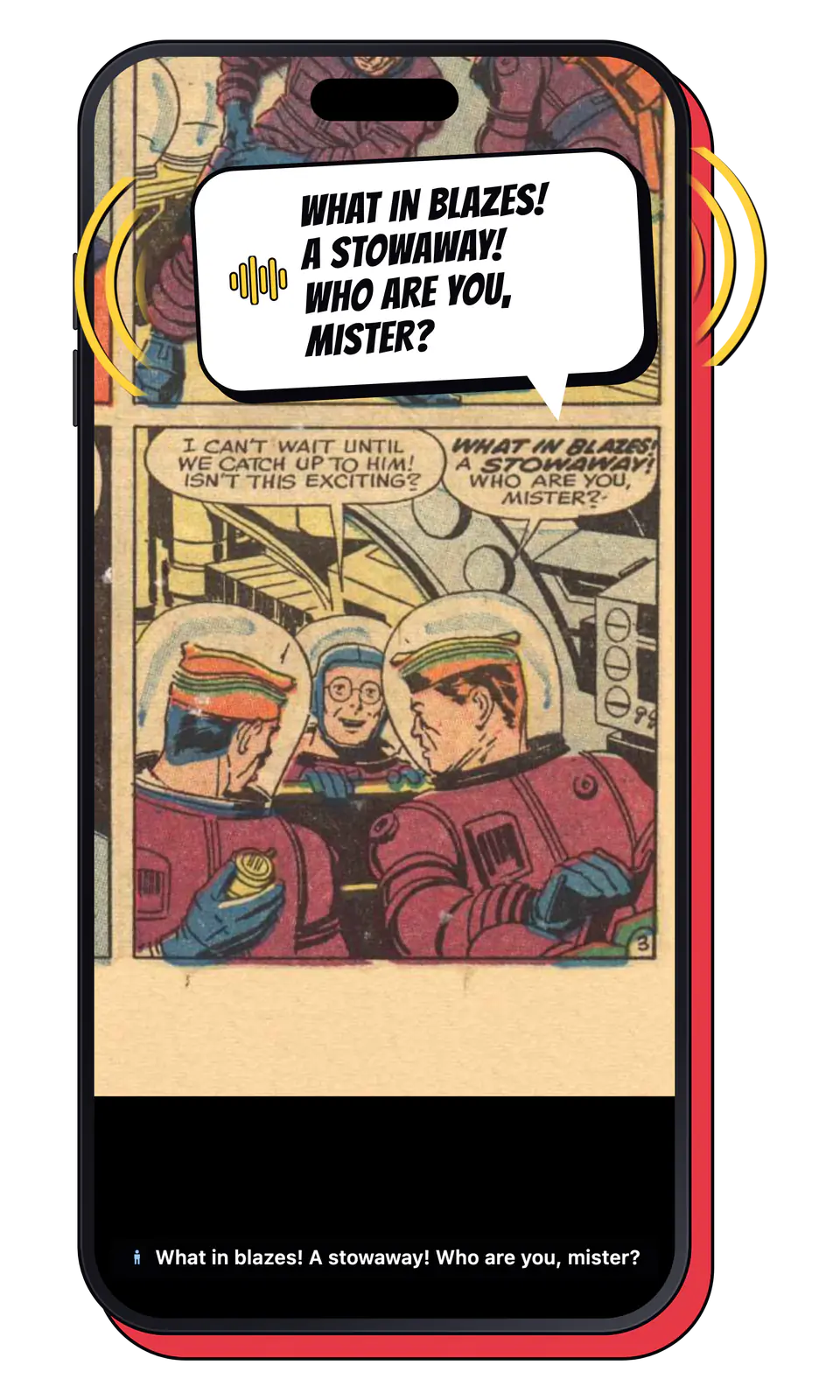
- Or listen: every issue on the free shelf is voiced already, every balloon read in order.
Panels is free on every issue you add, with a free account that holds 1 GB, about 20 single issues, and no card. Voicing your own files comes with a monthly plan or a top-up.
Zoom in on speech bubbles · Large print comic books
Where can I read old comics online for free?
On the LiveComics streaming shelf: public domain comics from the 1940s, 1950s and 1960s, from horror and war to science fiction and giant monsters, every issue voiced start to finish. Stream them with a free account, or try a short sample with no account at all.
Straight answers
Are old comics hard to read?
Often, yes: small hand lettering, about six panels to a page, long captions and faded scans. Reading one panel at a time, with the balloons popped out or read aloud, fixes most of it.
Why are old comics written in all capital letters?
They were lettered by hand, and capitals are quicker to letter evenly and stay clear at small sizes on cheap paper. The habit stuck long after.
How do I read old comics online?
Open one on the free LiveComics streaming shelf with a free account, or add your own CBR, CBZ, PDF or EPUB file. Both read one panel at a time on any phone, tablet or computer.
Can old comics be read aloud?
Yes. Every issue on the free streaming shelf is voiced start to finish. Your own files can be voiced too, with a monthly plan or a top-up, and you see the price in credits before you press Add.
How do I make the text in old comics bigger?
Read them in Panels, so each panel fills the screen, and switch on Pop out balloons to enlarge each speech balloon. On a page of six panels the lettering comes out close to twice as big.
Is LiveComics free?
Yes, to add and read your comics. A free account imports 30 comics a month with 1 GB of storage and no card, Panels is free on every issue, and voices come with a monthly plan or a top-up.
Read this page in: Español · 日本語 · Português · Français · Deutsch · Italiano · Polski · Türkçe · Indonesia · Tiếng Việt